
Written by
Wilsey YoungSummary: This post revolves around the solutions that can help free up drive space when external hard drive is full on a Windows PC. iBoysoft DiskGeeker for Windows is excellent in finding large files and analyzing space usage on hard drives, helping users delete unwanted files quickly. -From m3datarecovery.com
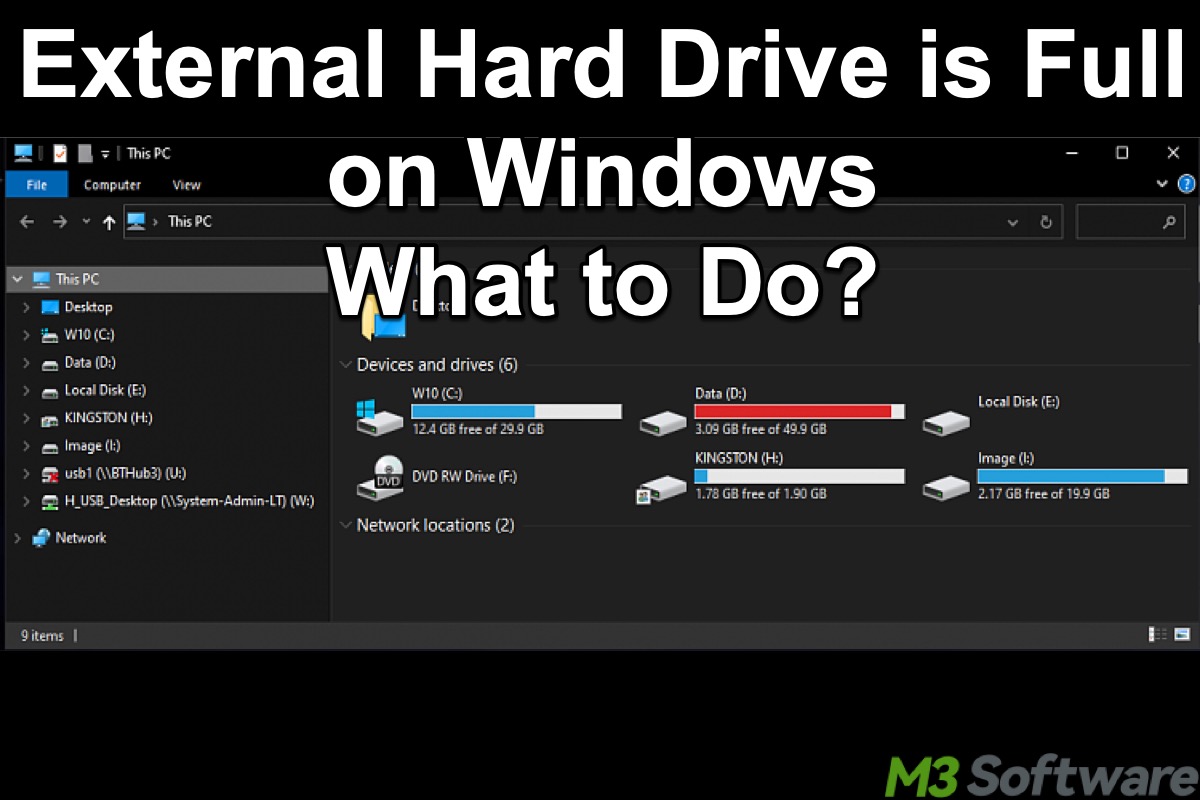
An external hard drive is a portable storage device perfect for data backup, flexible storage, and transfer of data, etc. Some Windows users wonder what to do when external hard drive is full.
This post shows different ways to free up space on the external hard drive connected to the Windows PC. Those solutions are also practicable if you notice the external hard drive space is full, but later on realize that the total size of the files hasn't reached the maximum storage size of the drive.
The following buttons can help you share this post easily!
What to do when external hard drive is full?
Here we introduce some feasible tricks you can use when external hard drive is full on Windows PC. FYI, here's what you can do when Local Disk C/C Drive is full: What Happens If Local Disk C is Full & How to Free Up Space?
Show hidden files when external hard drive is full on Windows
Some important files stored on the external hard drive may be hidden by default, as those invisible files are essential for the system or specific software to function properly, so they are marked as hidden to prevent accidental deletion or modification.
Here's how to make hidden files visible on Windows:
- Double-click This PC or My Computer on the Desktop to open File Explorer.
- Double-click the target external hard drive to open the drive.
- Tap on the View tab in File Explorer and tick the "Hidden items" option.
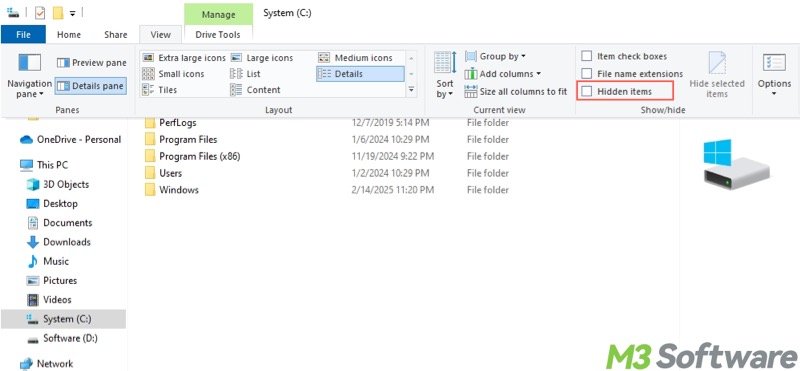
- Check the files in the external hard drive and see if they are necessary.
Search for large files when external hard drive is full on Windows
Suppose large files and unnecessary files abound in your external hard drive, locating and re-evaluating them one by one would be troublesome and time-consuming. In this case, iBoysoft DiskGeeker for Windows is highly recommended when the external hard drive is full.
iBoysoft DiskGeeker for Windows is a professional and user-friendly disk management tool that can help optimize disk space usage by searching for large files and analyzing the designated folder, making it easier to delete unwanted files to free up space.
Here's how to search for large files on external hard drive through iBoysoft DiskGeeker for Windows:
- Download, install, and launch iBoysoft DiskGeeker for Windows.
- Tap on the "Search for large files" button in the "Space analyzer" module from the main interface.
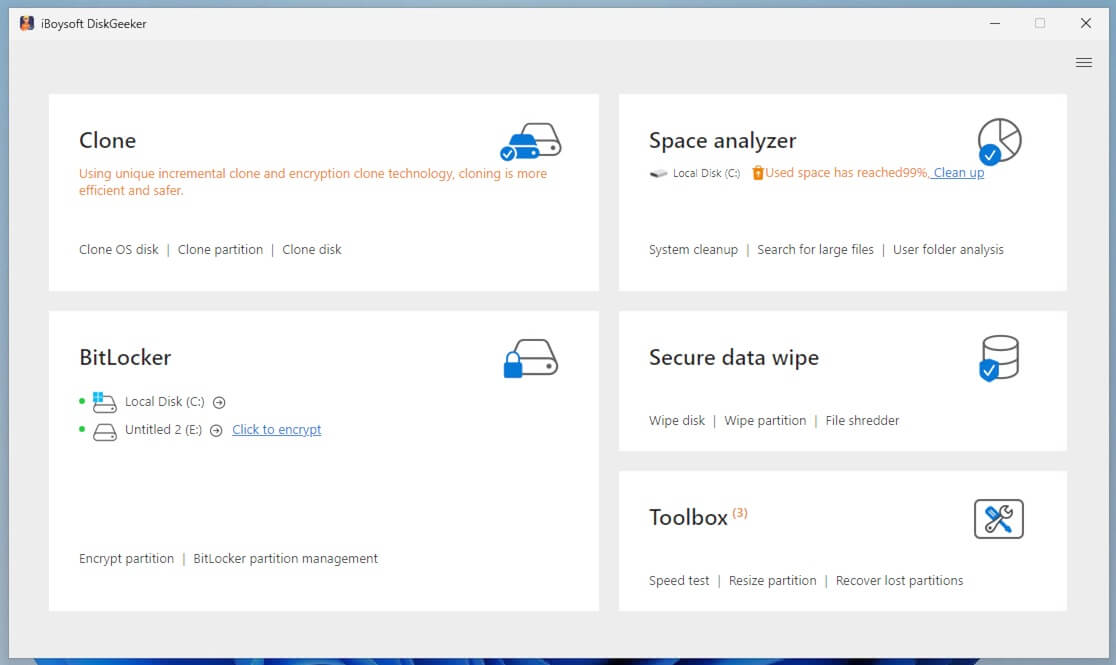
- Alternatively, tap on the "Space analyzer" module and choose "Search for large files."
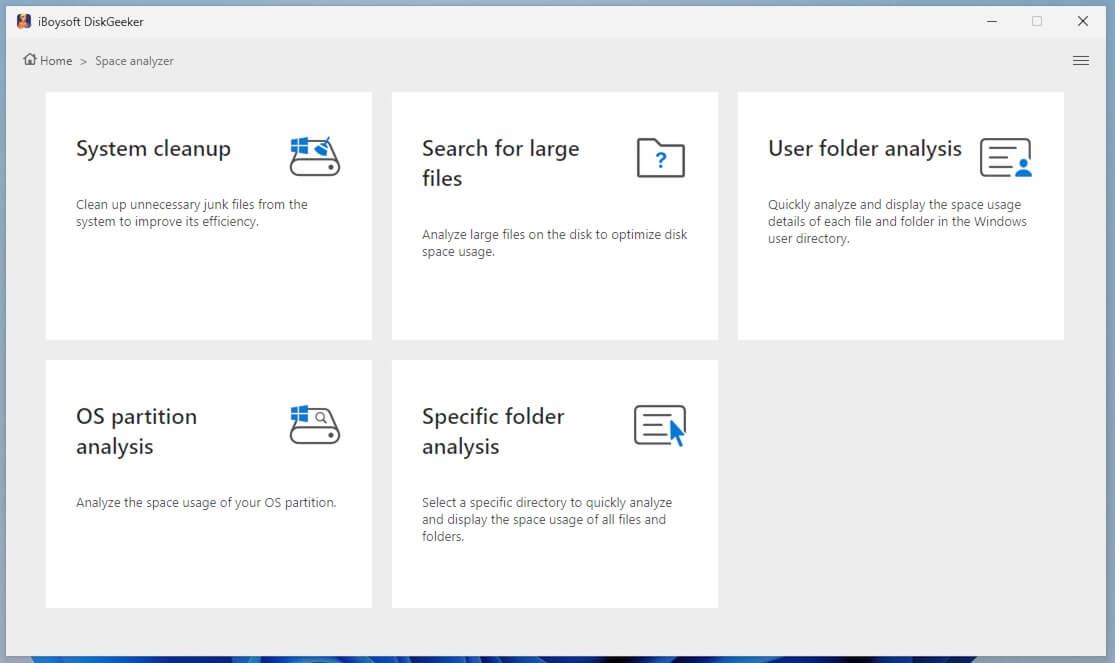
- Select the target external hard drive.
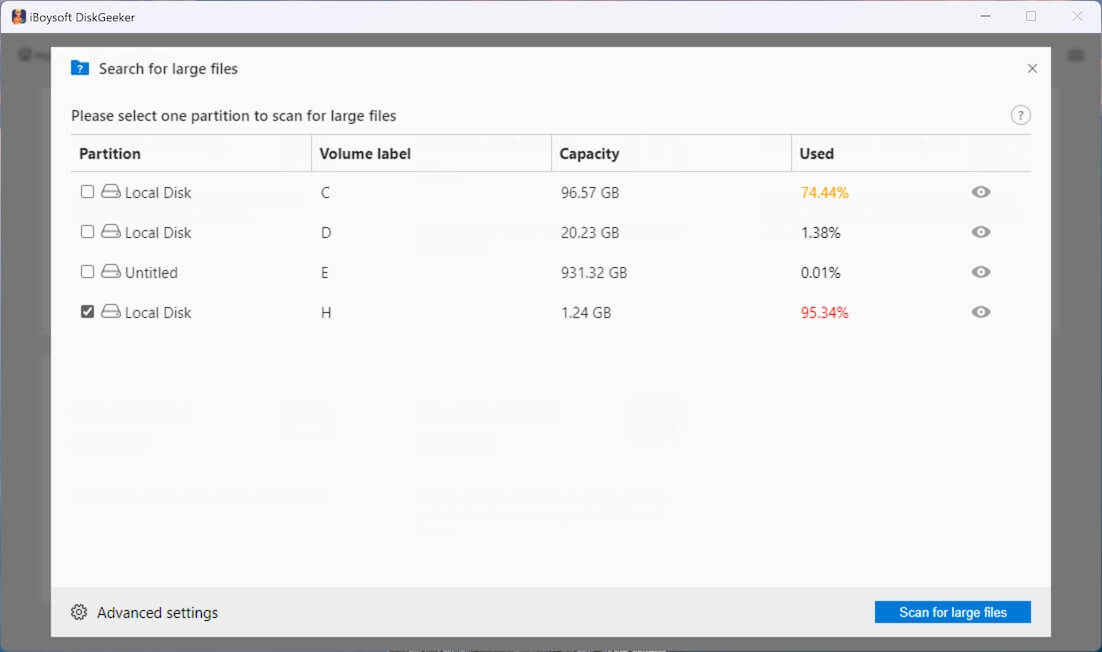
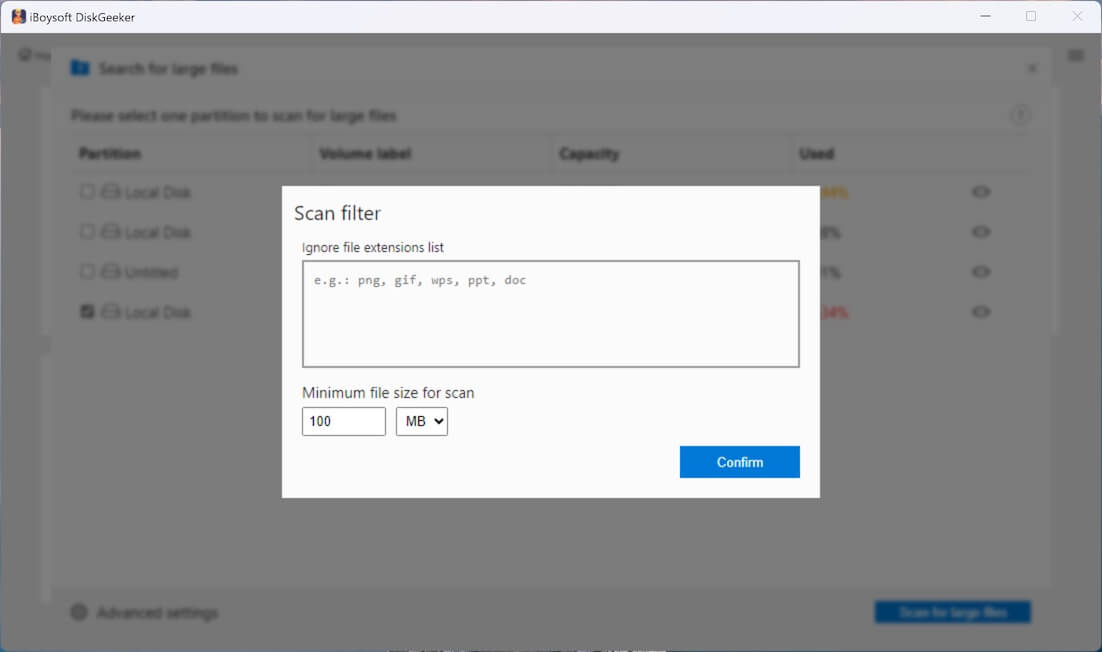
- Go to "Advanced settings" at the bottom left corner to customize the settings, which involves setting the minimum file size for scanning and adding the file extensions that you want this tool to ignore during scanning.
- Click the "Scan for large files" button to begin the scanning.
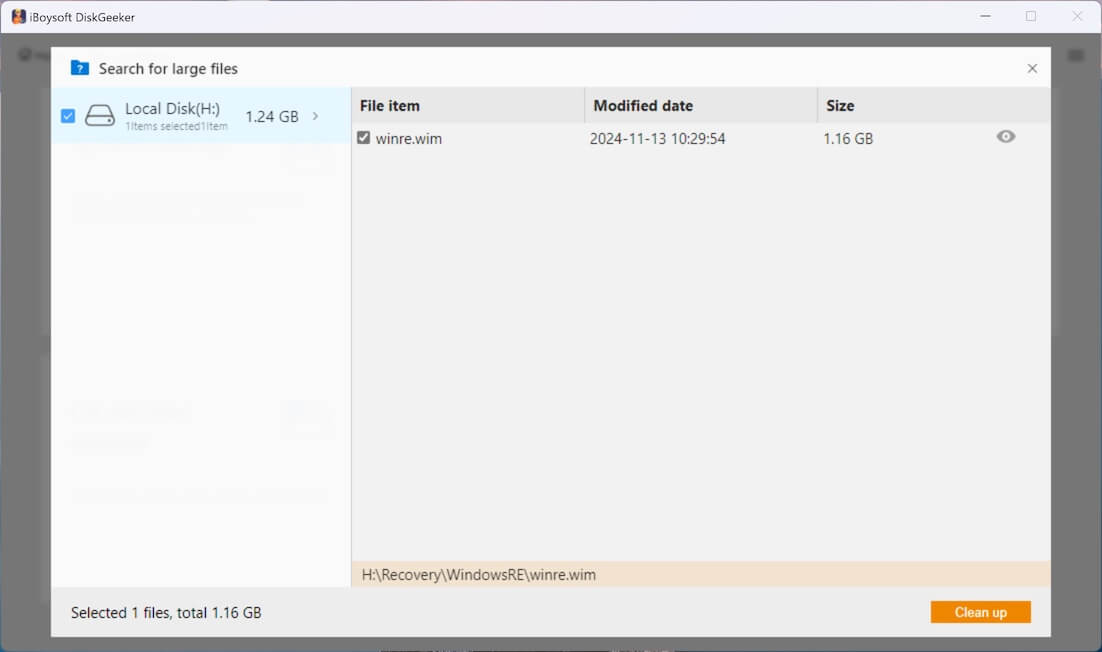
- Tap the view button next to the searched large files to check them, tick those you want to delete, and click "Clean up."
Tips: The Space Analyzer module in iBoysoft DiskGeeker for Windows boasts other features that can facilitate the disk cleanup, such as System Cleanup, OS Partition Analysis, and Specific Folder Analysis.
This wonderful disk management tool is worth recommending!
Use built-in disk cleanup tool when external hard drive is full on Windows
When external hard drive is full on Windows, you can rely on the built-in disk cleanup tools to free up drive space.
- Press the Windows+S keys on your keyboard.
- Type disk cleanup in the Windows search box and tap on the result to open the tool.
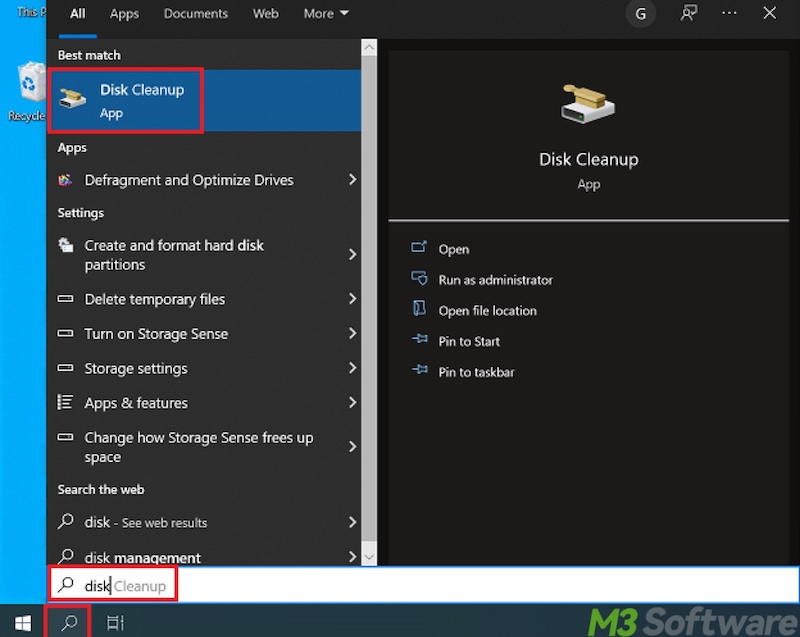
- When a small window pops up, choose the drive you want to clean and click the OK button to start scanning.
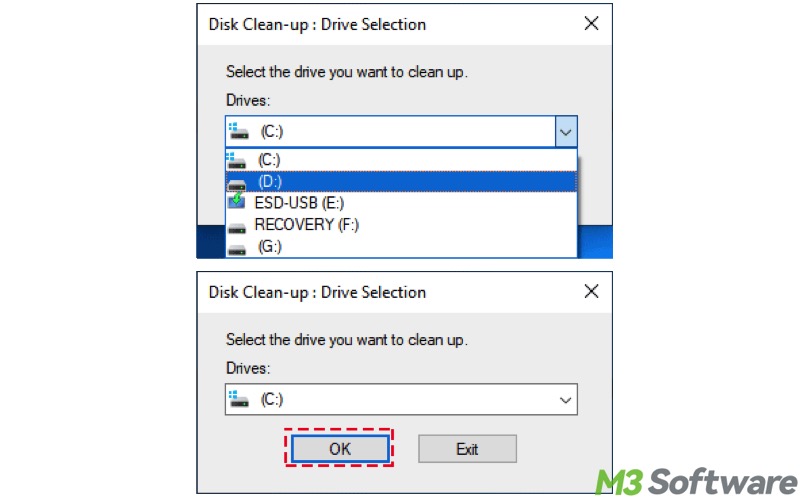
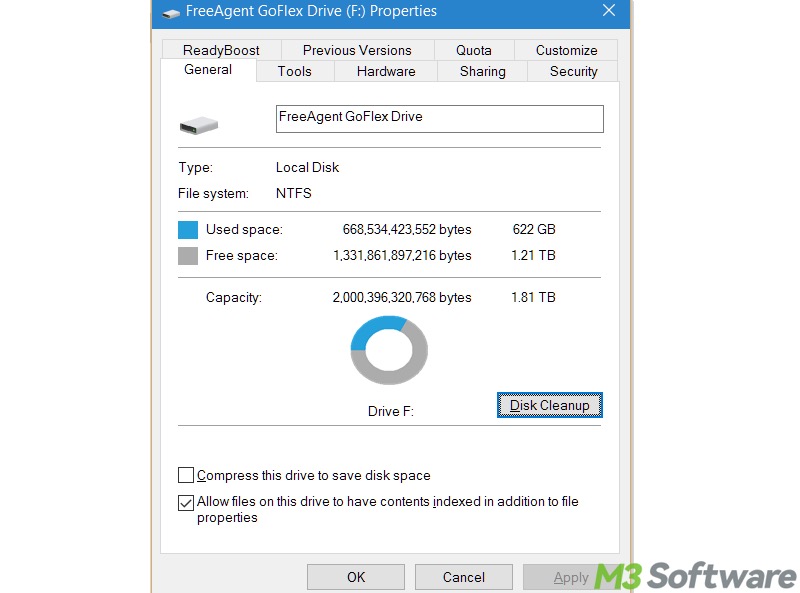
- Alternatively, you can right-click on the external hard drive in File Explorer, choose Properties, and go to the General tab to use Disk Cleanup tool.
- When the scanning is done, tick the files you want to delete, and click the OK button to delete them.
Defragment and optimize drives when external hard drive is full on Windows
When external hard drive is full, you can analyze or optimize the drive performance through the built-in defrag tool on Windows.
Some Windows geeks claim that if the fragmentation is very severe, defragmentation might lead to slight gains in free space because data is compacted together. Here's how:
- Press the Windows+S keys on your keyboard to launch the Windows search box.
- Search for Defragment and Optimize Drives.
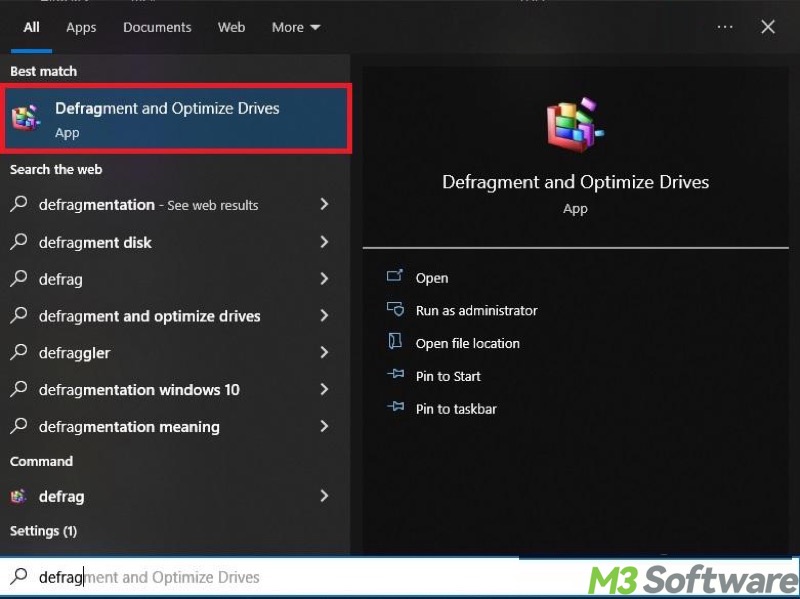
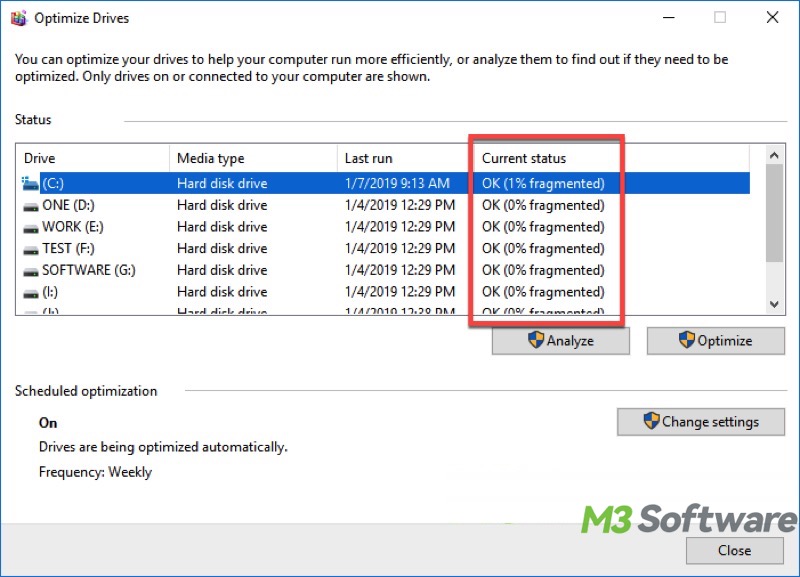
- Select the target external hard drive.
- Tap on the Analyze or Optimize button.
Format the drive to regain lost space when external hard drive is full on Windows
Suppose the external hard drive is full, but you find out that the total size of the files stored on the drive doesn't account for the full drive space, formatting the drive will help regain the lost space, as formatting erases all data, including hidden files taking up a significant amount of space.
It also rebuilds the file system, eliminating any file system errors or partitions that might be misreporting the free space.
Note: Formatting will erase all files and data on the drive, so backing up the important files is extremely essential.
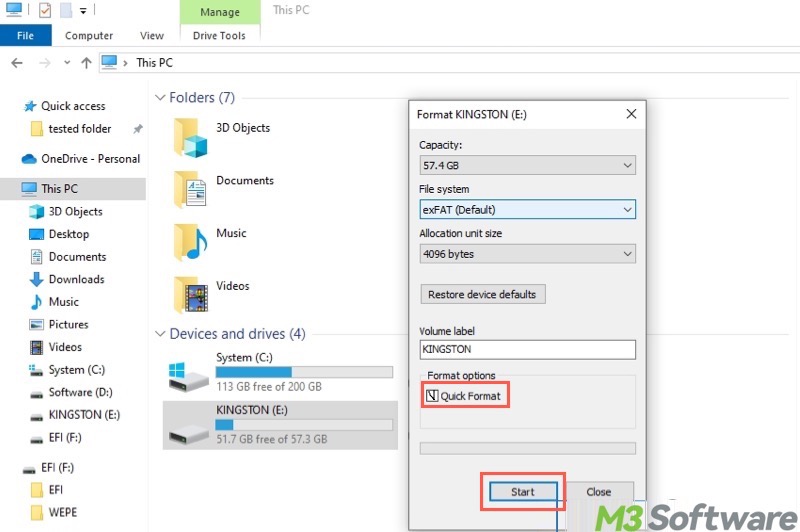
Here's how to format through File Explorer:
- Double-click This PC or My Computer on the Desktop to open File Explorer.
- Right-click on the target external hard drive and choose Format.
- Choose the file system, select Quick Format, and click the OK button.
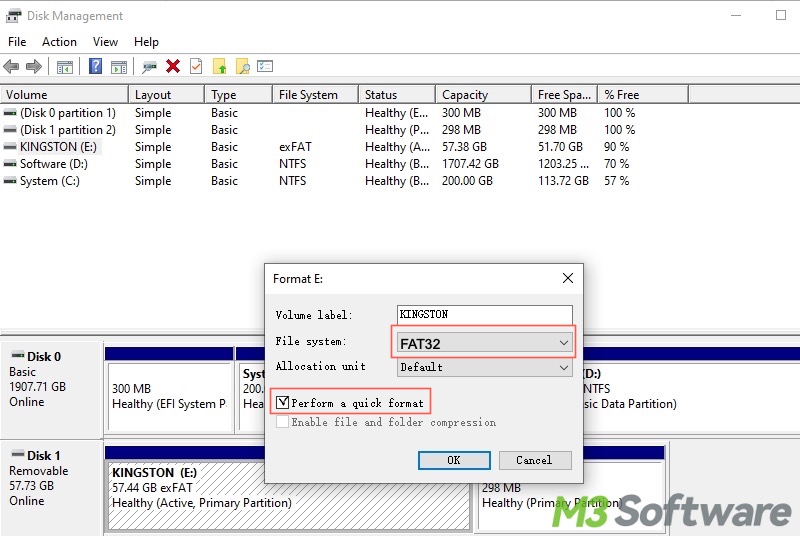
How to format through Disk Management:
- Right-click on the Start menu button or press the Windows+X keys on the keyboard to choose Disk Management.
- Right-click on the target external hard drive and select Format.
- Choose the file system and tick "Perform a quick format."
- Tap on the OK button to format.
Do you find this post helpful? You can share this article with your friends!