iBoysoft DiskGeeker for Windows Online Help - AI System Drive Cleanup & Disk Space Management
Overview of AI System Drive Cleanup & Disk Space Management
"AI disk space optimization" in iBoysoft DiskGeeker for Windows combines intelligent system cleanup, disk space analysis, and large file scanning to help you manage PC and external drive storage and free up disk space more efficiently.
Instead of simply showing what is taking up space, it uses smart scanning and file analysis to help you understand what can be safely removed, what should be kept, and where your storage space is being used.
It includes three core features:
System Drive (C Drive) Cleanup
Deeply scans your C drive for junk files, including system cache, outdated system components, system logs and dumps, system temporary files, app caches, and leftovers from uninstalled apps. Then, it intelligently identifies and auto-selects removable items, so you can review them and clean them up with one click.
It also scans for personal files, large files, and installed apps, helping you find and manage sensitive data that may be taking up valuable space.
Partition or Folder Space Analysis and Optimization
Analyzes files on your system partition, other partitions, user folders, or specific folders to show you how your storage space is being used.
You can view the results in visual or list mode based on your preference. With AI-powered explanations, you can understand what they are used for and make informed decisions about what to remove, keep, or manage.
Large File Scanning
Quickly finds large files that are taking up significant storage space on your partitions and delete whether to delete them to free up storage space.
You can customize the size of the large files and filter the types of files.
How to Clean Up the System Drive (C Drive)?
Step 1: Click "Clean" next to the C drive from the AI disk space optimization module.
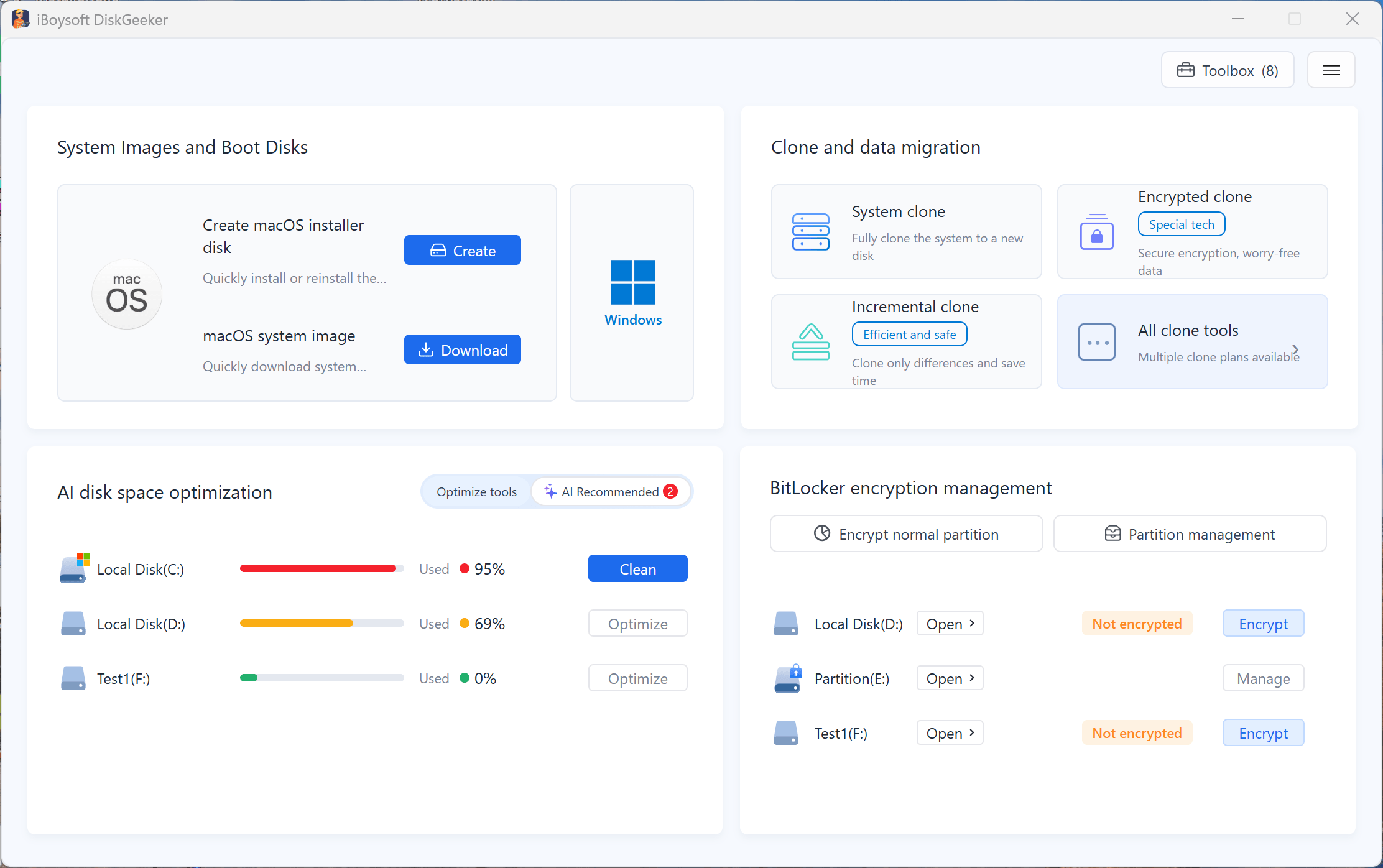
iBoysoft DiskGeeker for Windows will immediately search for junk files and personal files on the system disk.
The process will take a moment. Just wait for it to finish.
Step 2: Check the scanning results.
The scanning results are listed by category.
The files automatically selected are those that the software has intelligently identified as safe to delete. You can click "Details" next to each file type to review the files and ensure you want to delete them.
✅ System cache: Temporary cache files generated by the system, including system update cache, security scan cache, system component cache, thumbnail cache, system runtime cache, and more.
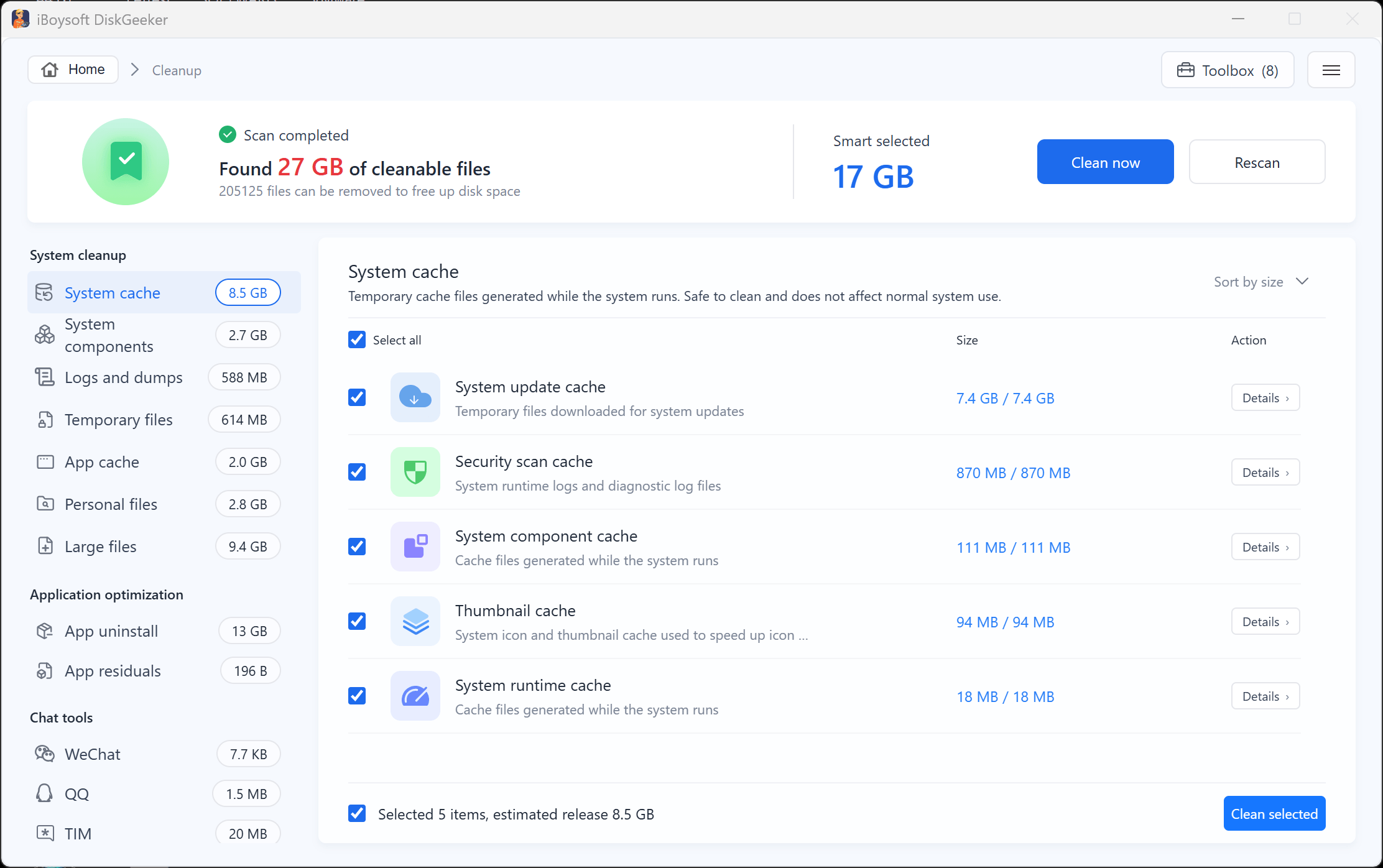
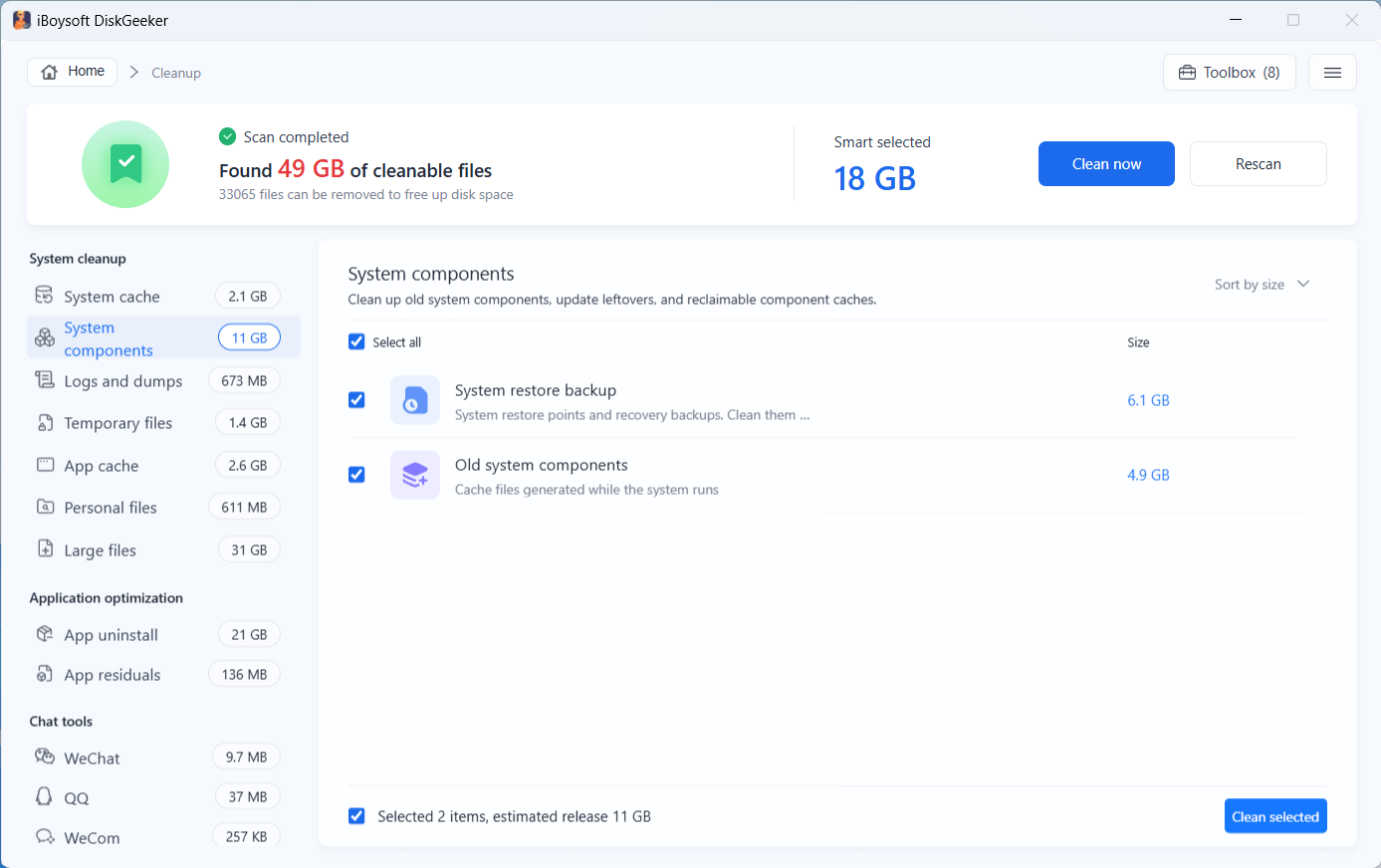
✅ System components: Outdated system components, old update leftovers, and reclaimable component caches.
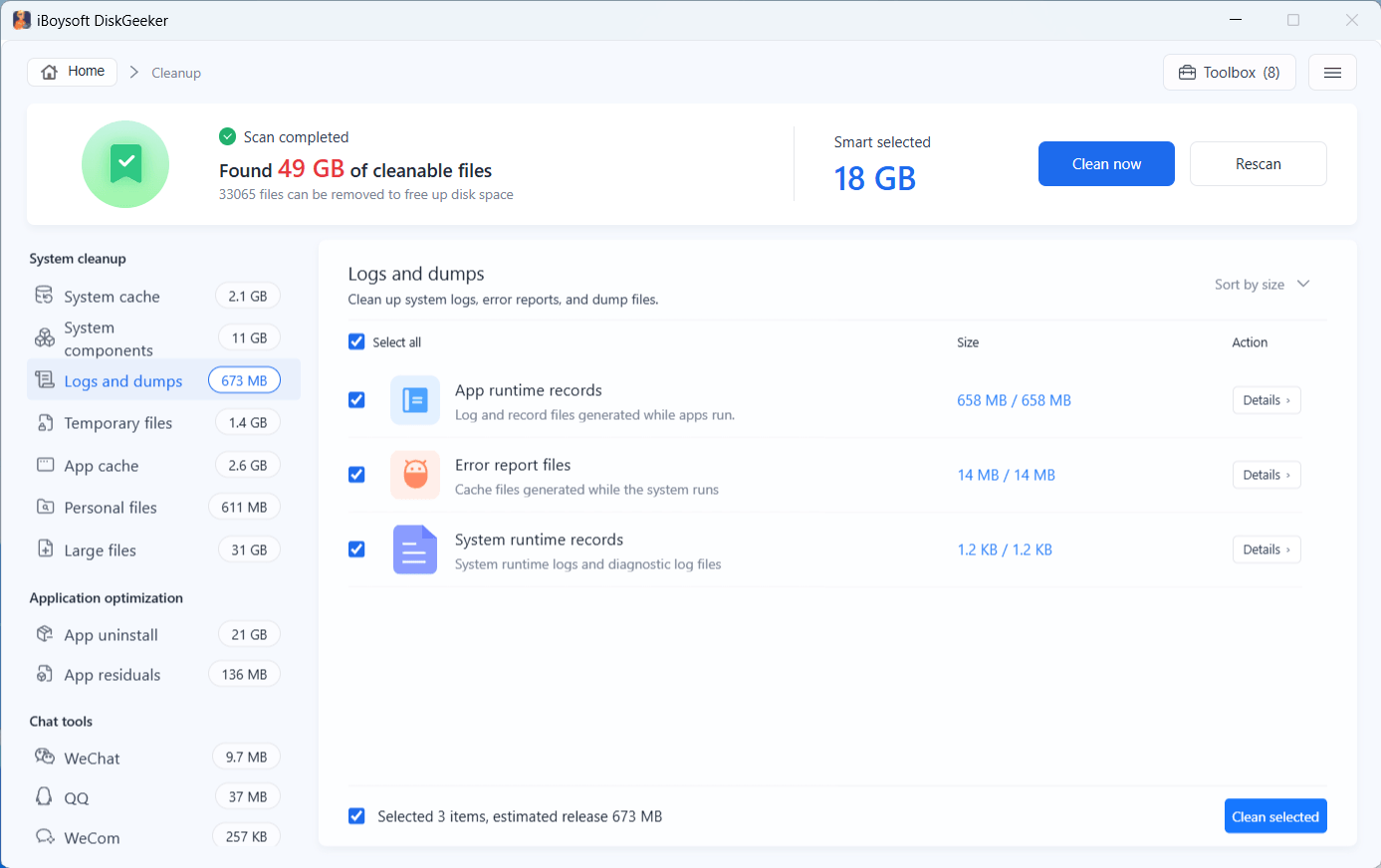
✅ Logs and dumps: System log files, system error reports, and dump files.
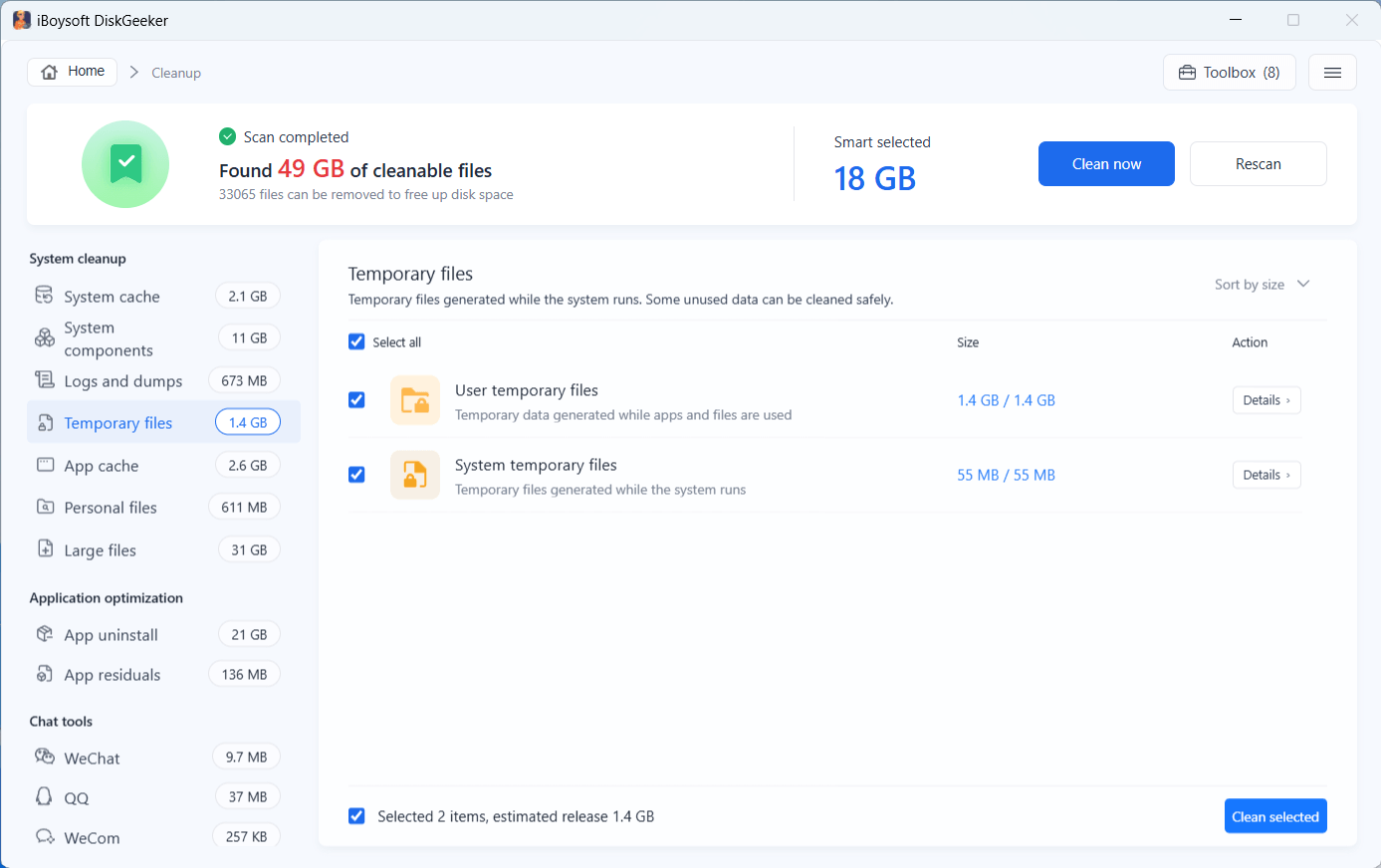
✅ Temporary files: Temporary files generated by the system and apps.
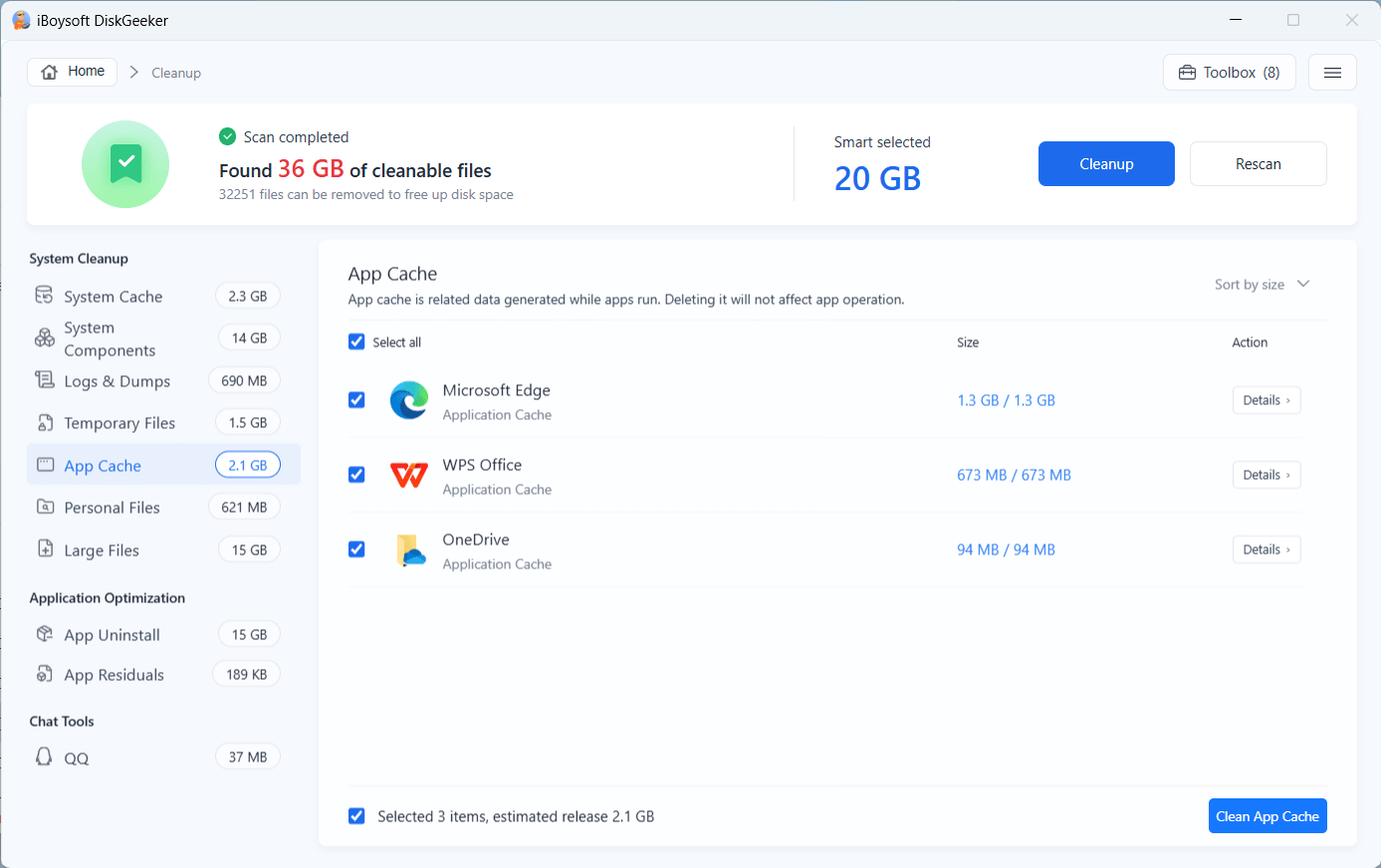
✅ App cache: Cache data generated by apps and deleting it won't affect the app's performance.
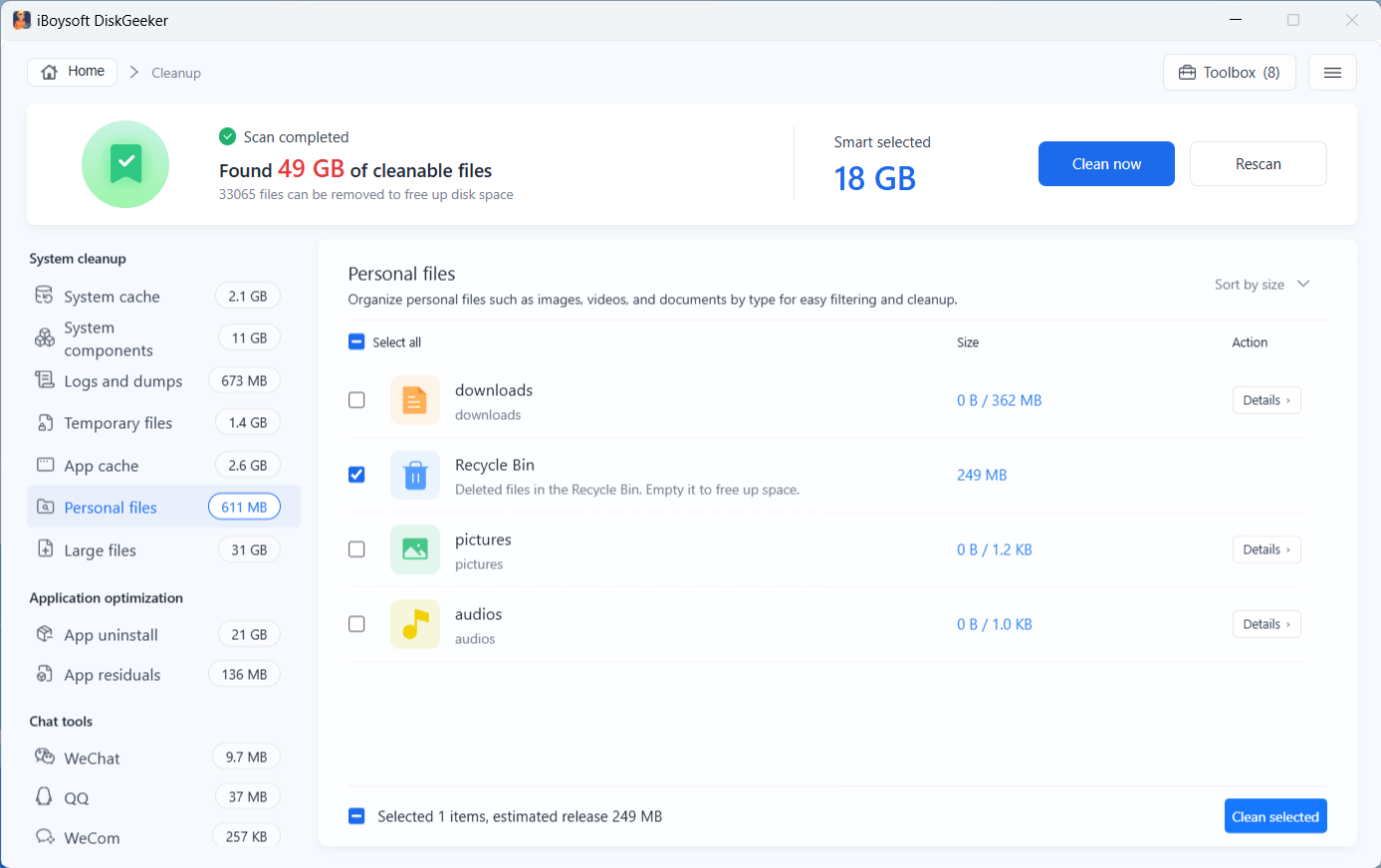
✅ Personal files: Different types of personal files, such as pictures, downloads, audio, videos, Recycle Bin data, etc.
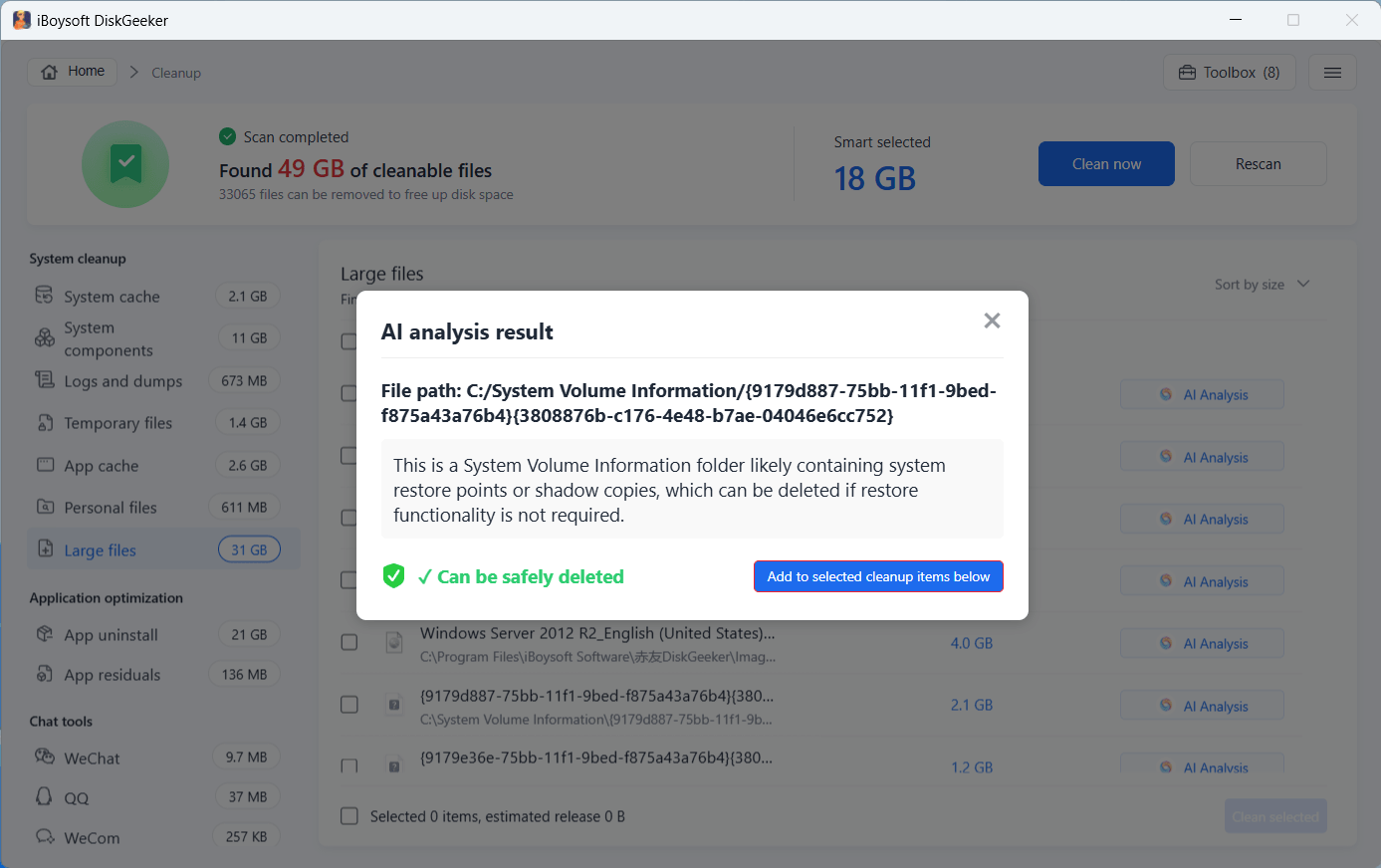
✅ Large files: Files that consume much space. You can click "AI Analysis" to analyze what they are and whether you can delete them.
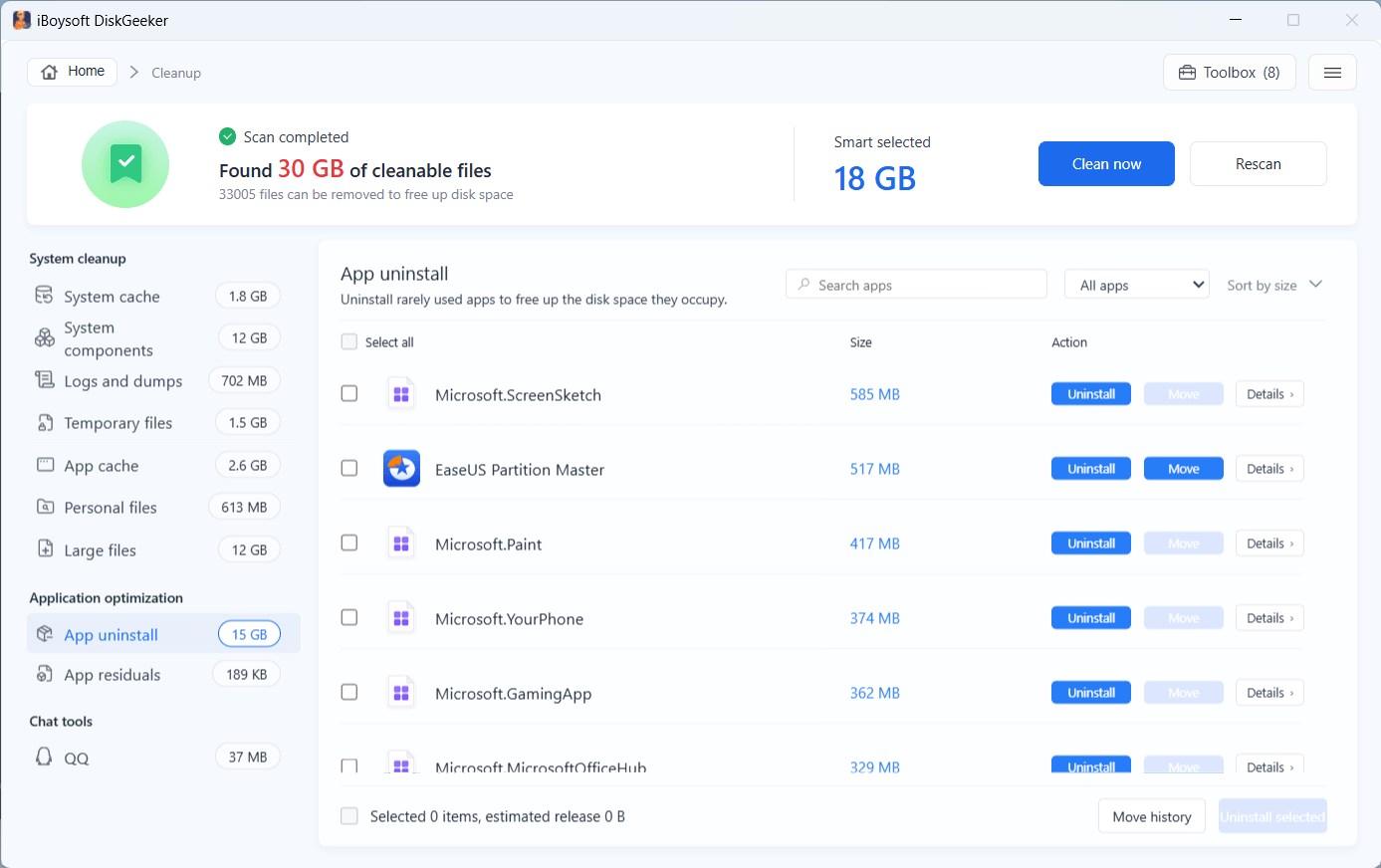
✅ App uninstall: All system and third-party apps on your PC. Click the drop-down menu to show only system apps or only normal apps.
You can click "Move" to move third-party apps to another local partition instead of deleting them. Notably, third-party apps can't be moved to the C drive or an external drive, and system software can only be uninstalled rather than being moved.
Here, it scans and lists apps and all their related files, including cache files, program files, and data files. To learn more, just click "Details" next to each app.
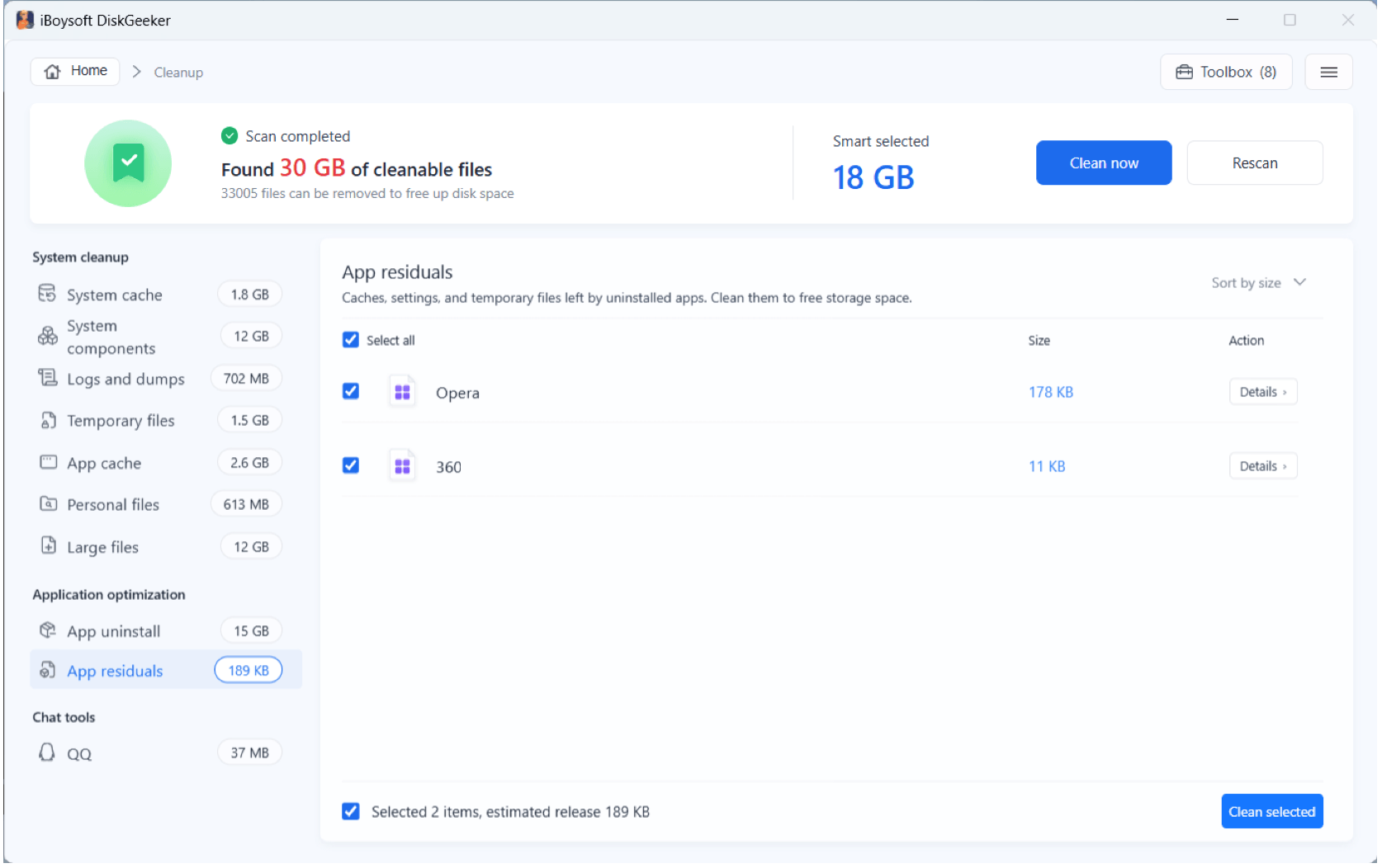
✅ App residuals: Leftover caches, settings, and temporary files of previously uninstalled apps.
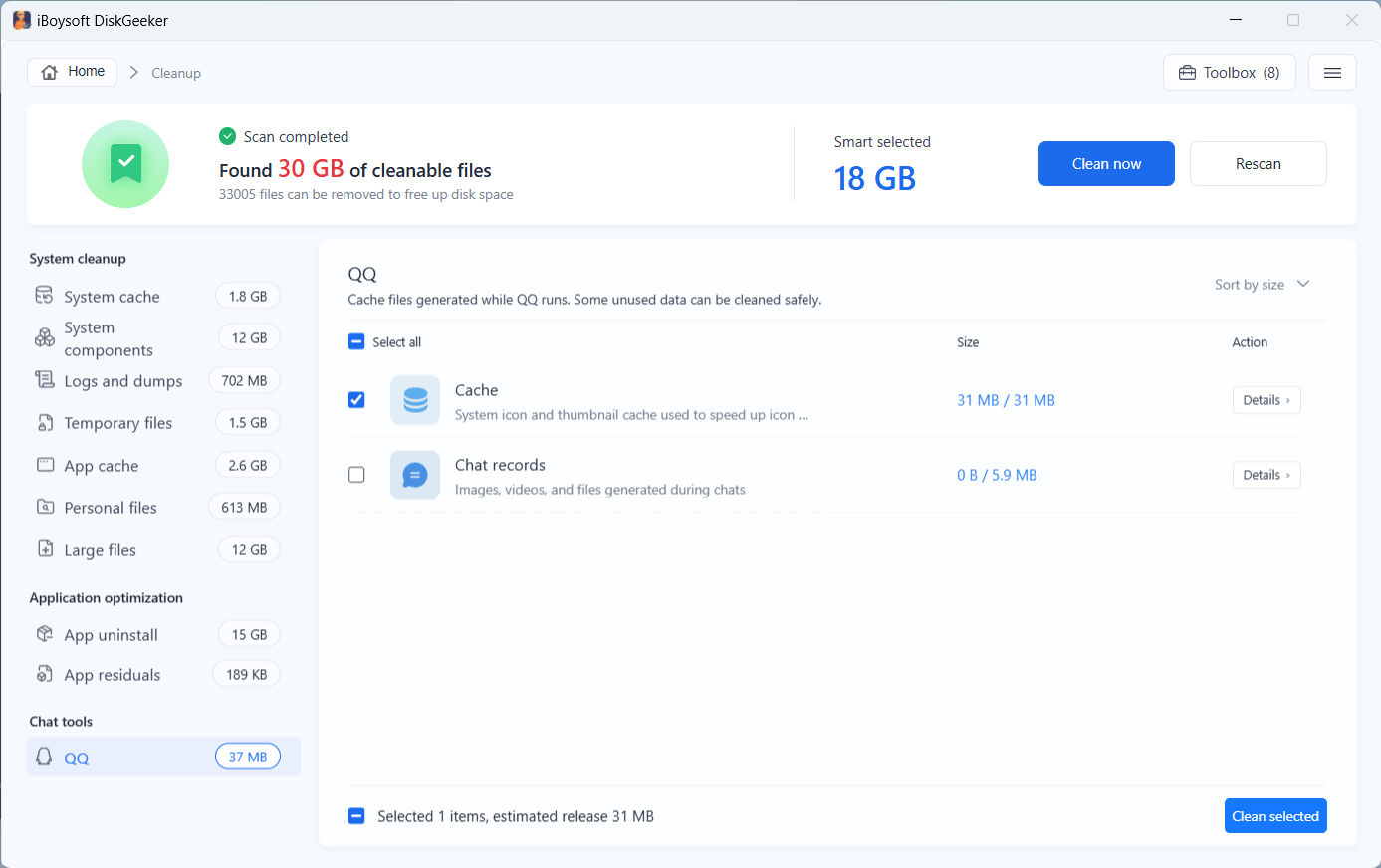
✅ Chat tools: Cache and temporary files of chat tools.
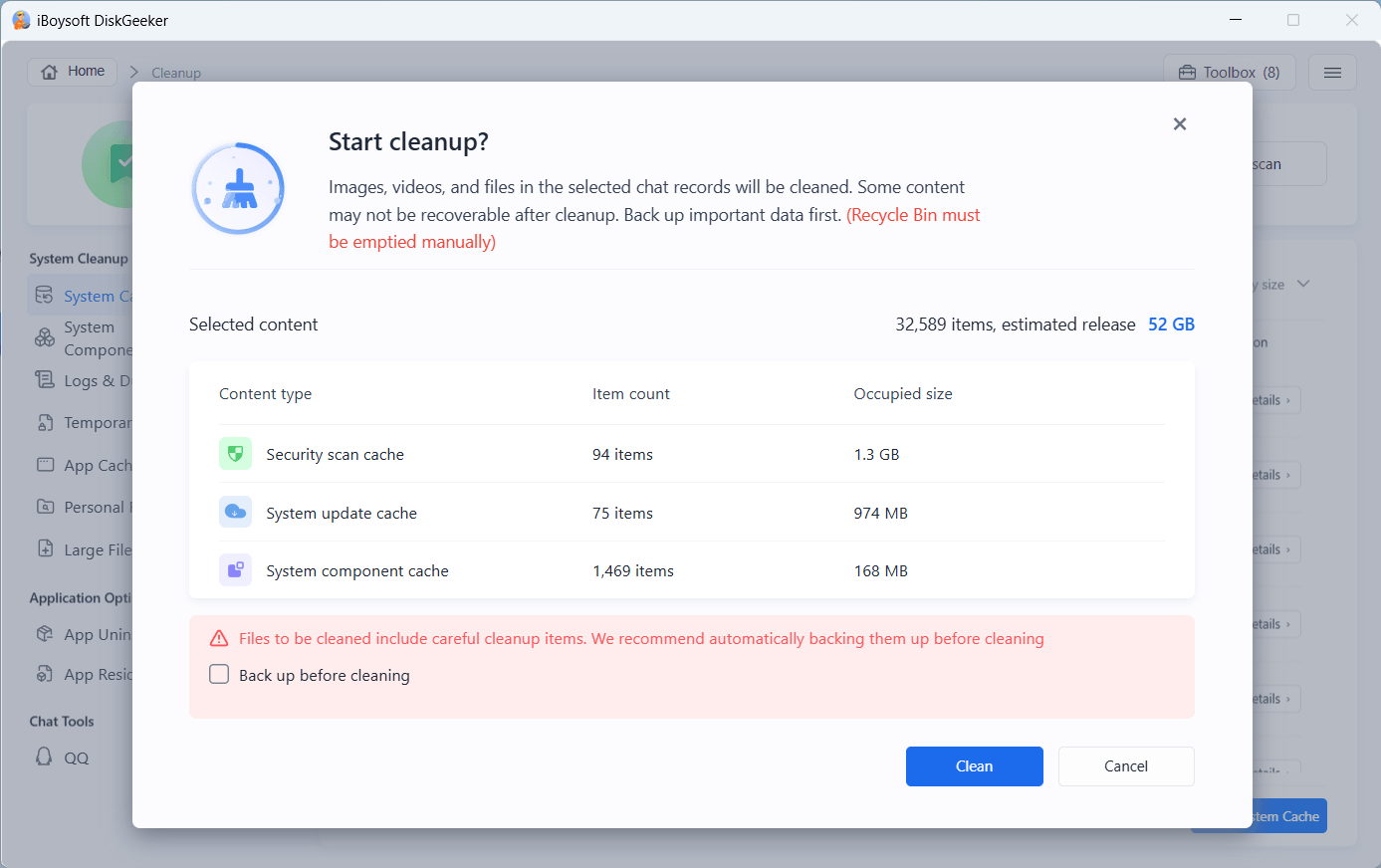
Step 3: After checking, click "Clean now" to delete all the selected files at a time.
If your selected files contain any sensitive data, you'll see the "Back up before cleaning" option on the prompt. Select it and choose a location to back up the data.
Or, you can delete the files in each category one by one by clicking "Clean selected" on each category page.
How to Search for Large Files on a Disk?
Step 1: In the AI disk space optimization module, click "Optimize tools" and then select "Search for large files."
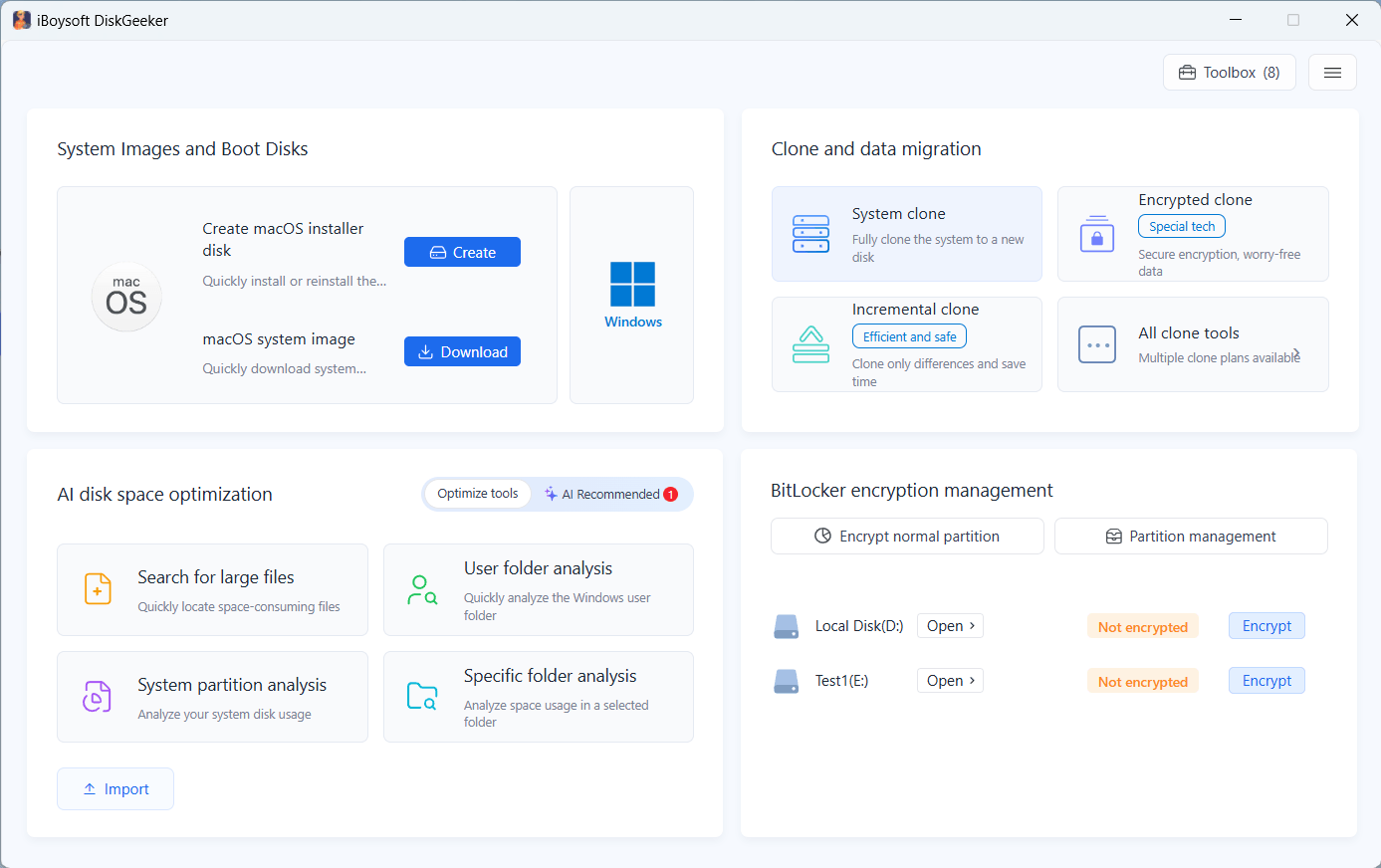
Step 2: Choose a partition to scan for large files.
For the first time to searching for large files, you need to go to "Advanced settings" at the bottom left corner to customize the settings, here, you can set the minimum file size for scanning, and add the file extension to exclude these types of files from the scanning.
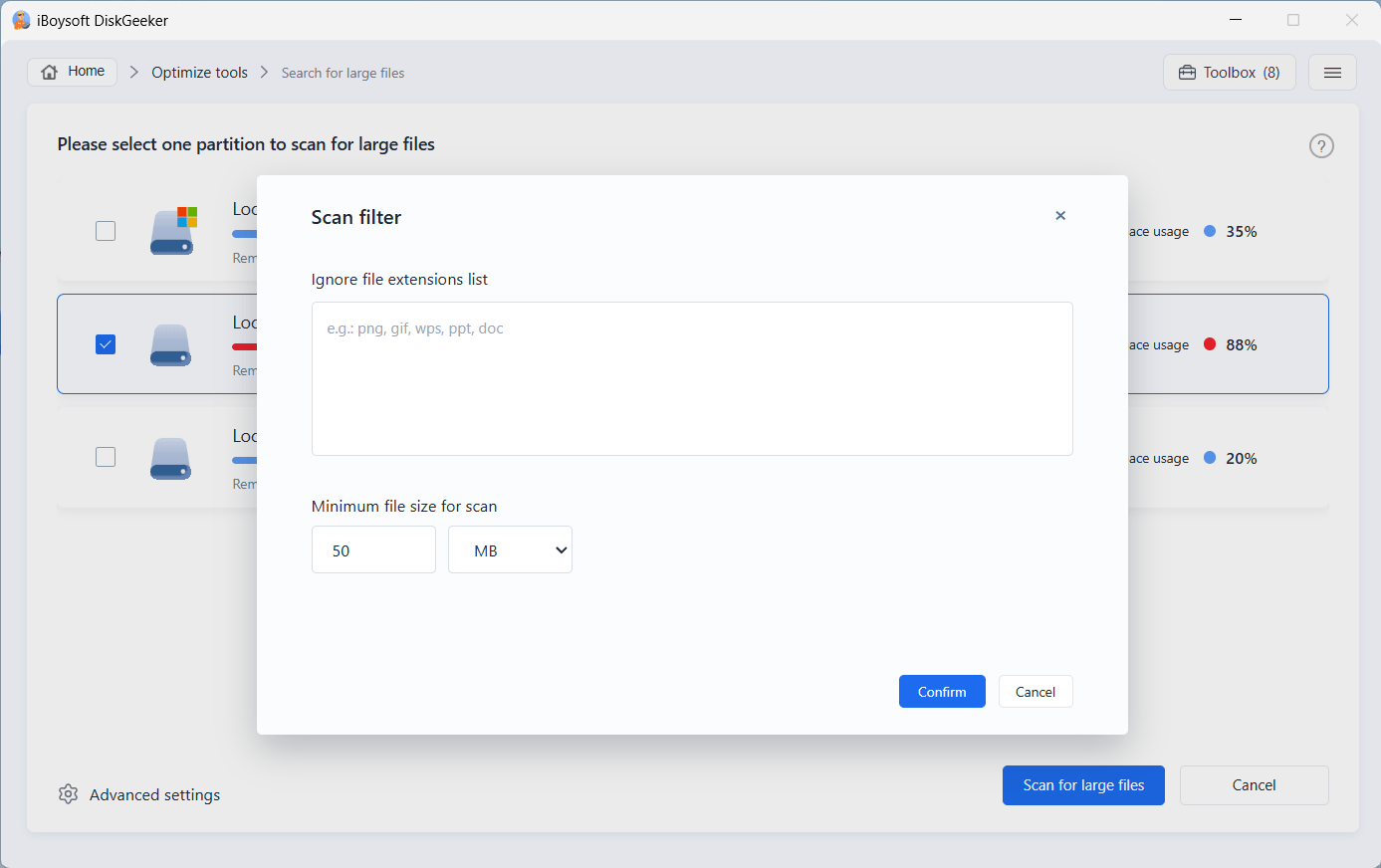
Step 3: Click "Search for large files" to start scanning.
Step 4: Wait for the scanning process to complete.
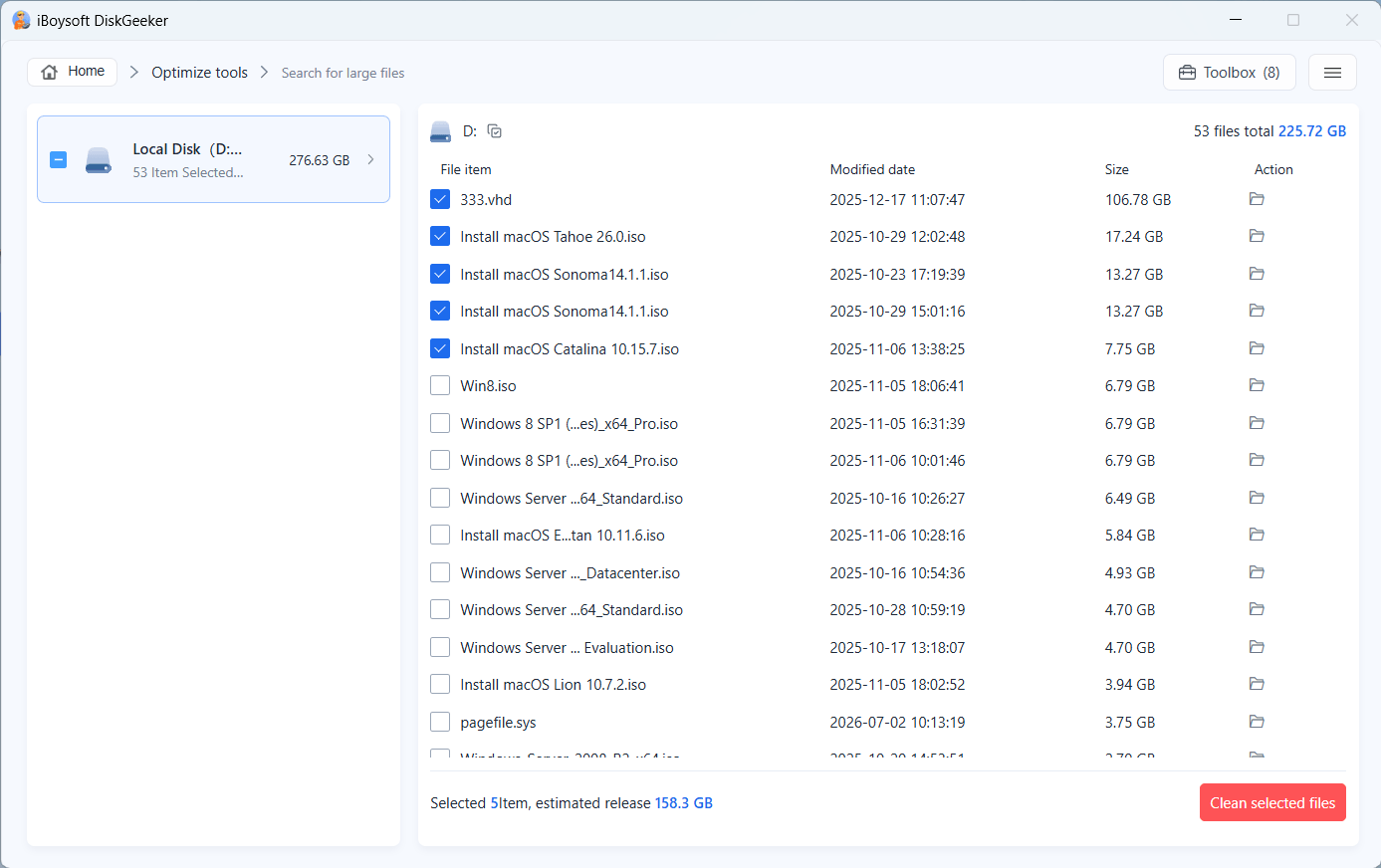
Step 5: Select those files you want to delete and click "Clean selected files".
To view a specific file's details, click the folder icon next to the file to open it in its original folder.
How to Analyze Space Usage of the System Partition, Another Partition, or a Folder?
Step 1: Click "Optimize" next to the partition in the AI disk space optimization module.
To analyze the system partition, user folder, or a specific folder, click "Optimize tools" and then select "System partition analysis,"User folder analysis," or "Specific folder analysis."
Step 2: Wait for the scanning to complete.
The scanning time depends on how much data is on the target partition or folder.
Step 3: View the results.
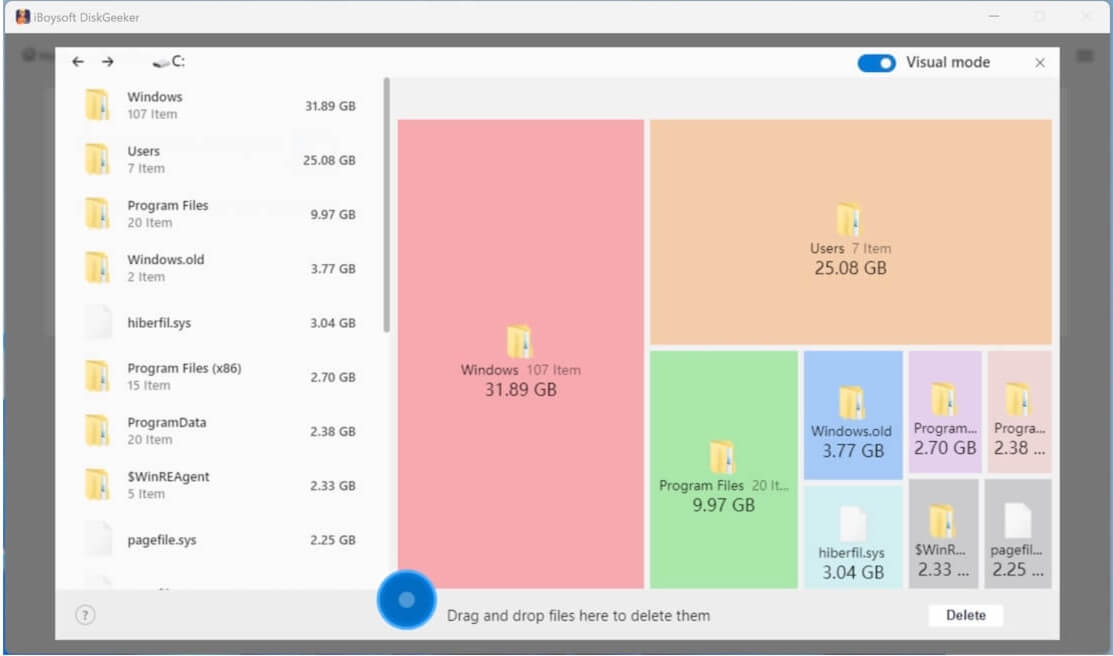
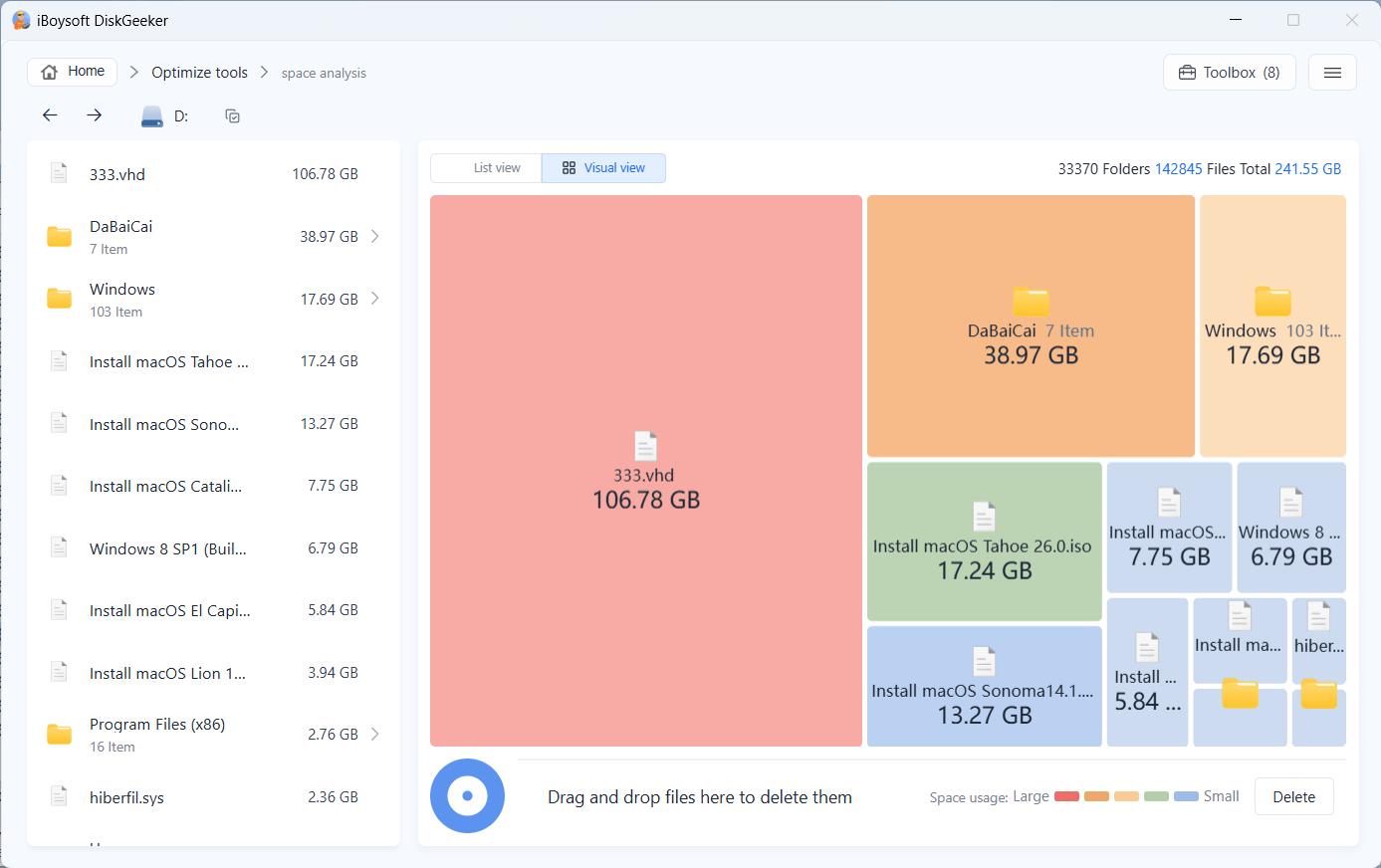
The scanned results are displayed in visual mode by default. The left and right views display the same directory level, with the right view providing a visual representation of the files shown in the left view.
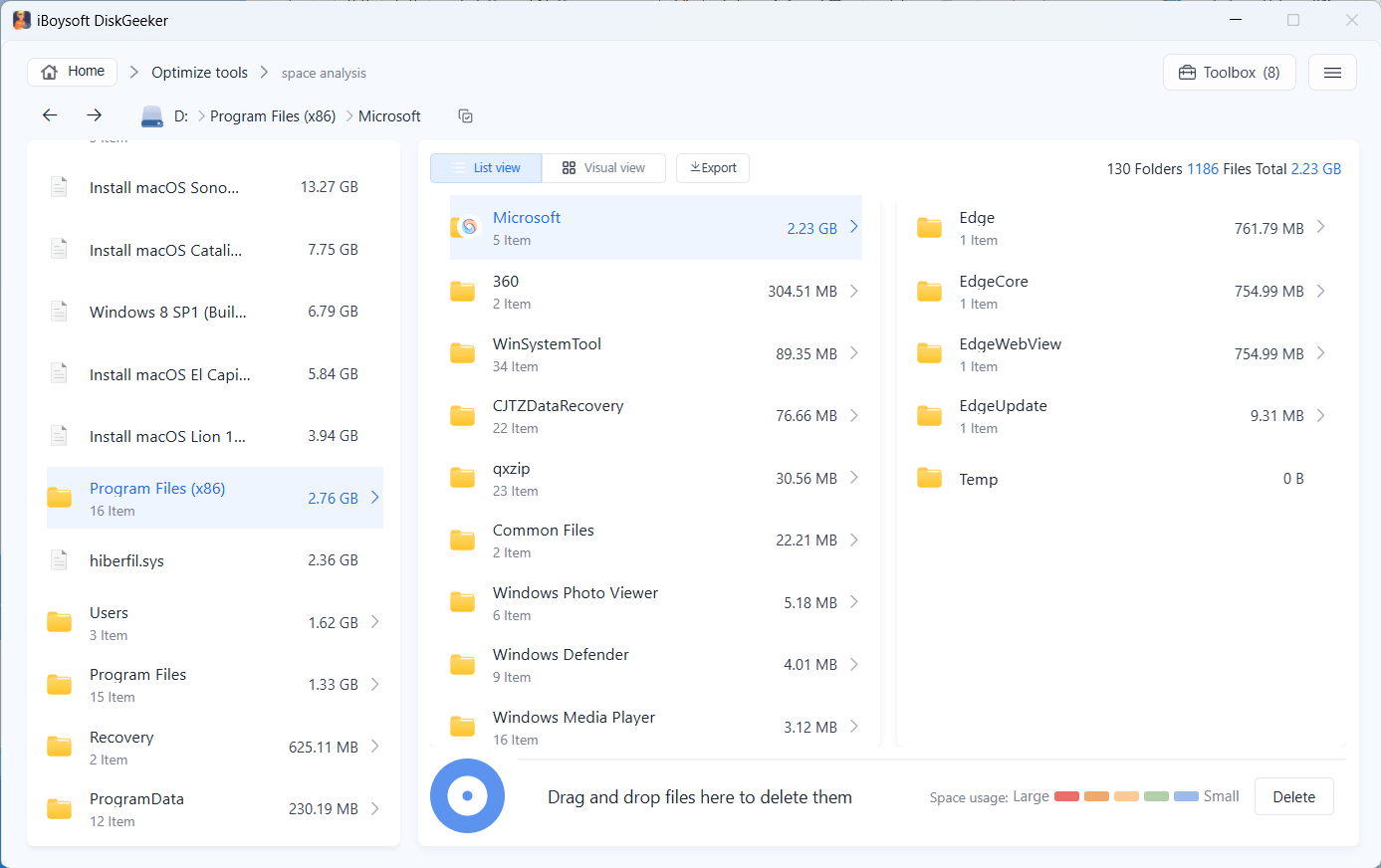
Click the List view button in the upper-right corner to view the scanned results intuitively by directories.
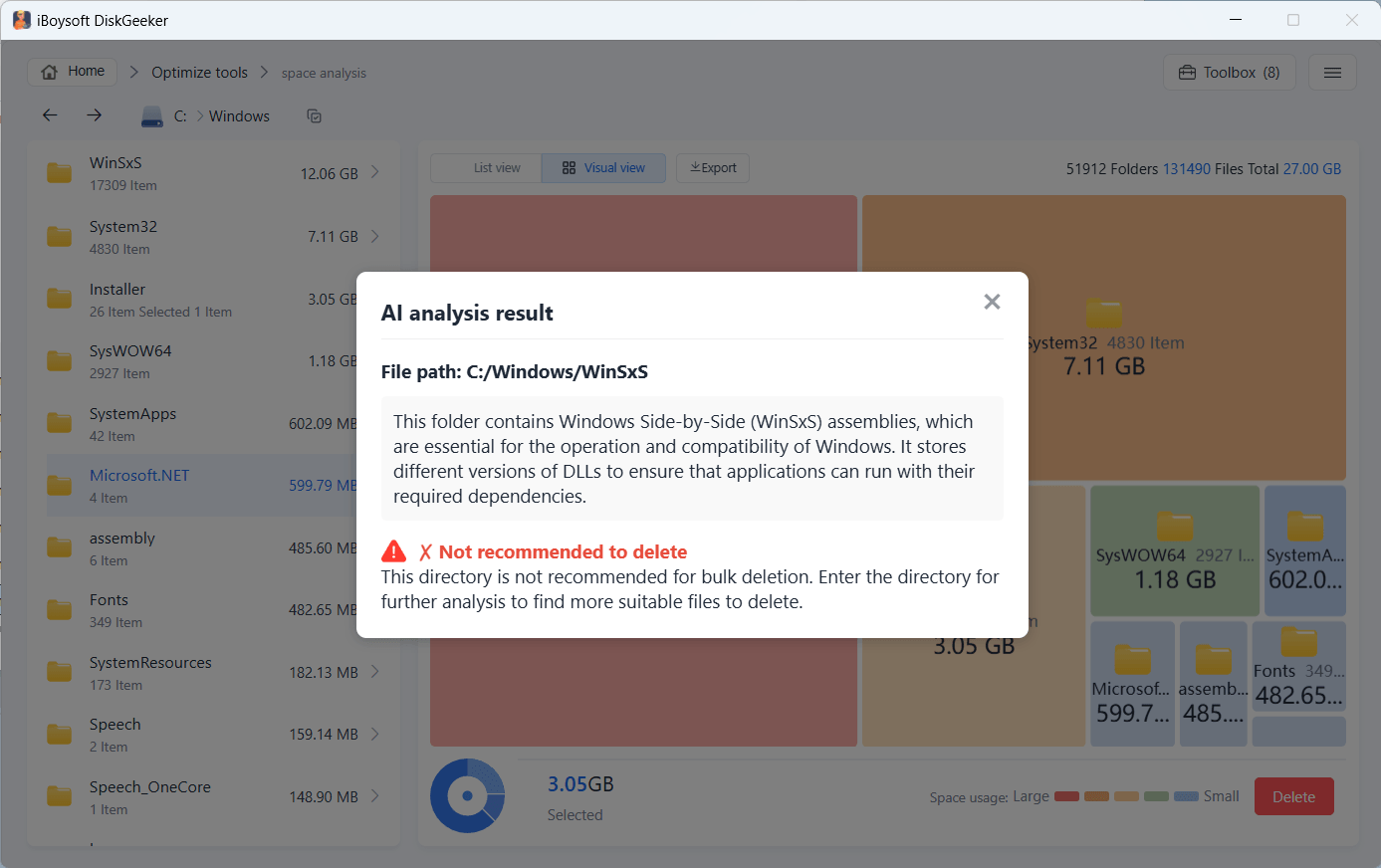
In both modes, when your cursor is over a file or folder, a colorful ball will appear. Click it to open the AI explanation and learn what the file or folder is and whether you can delete it safely.
Step 4: Drag and drop any unwanted file into the Trash Bin at the bottom of the window (a blue circle).
This step is to collect all the items you want to delete from the scanning results. The Trash Bin will show the total size of the collected files.
If you regret dragging a certain file into the Trash Bin, click to open the Trash Bin and click "Remove" next to that file to undo the action.
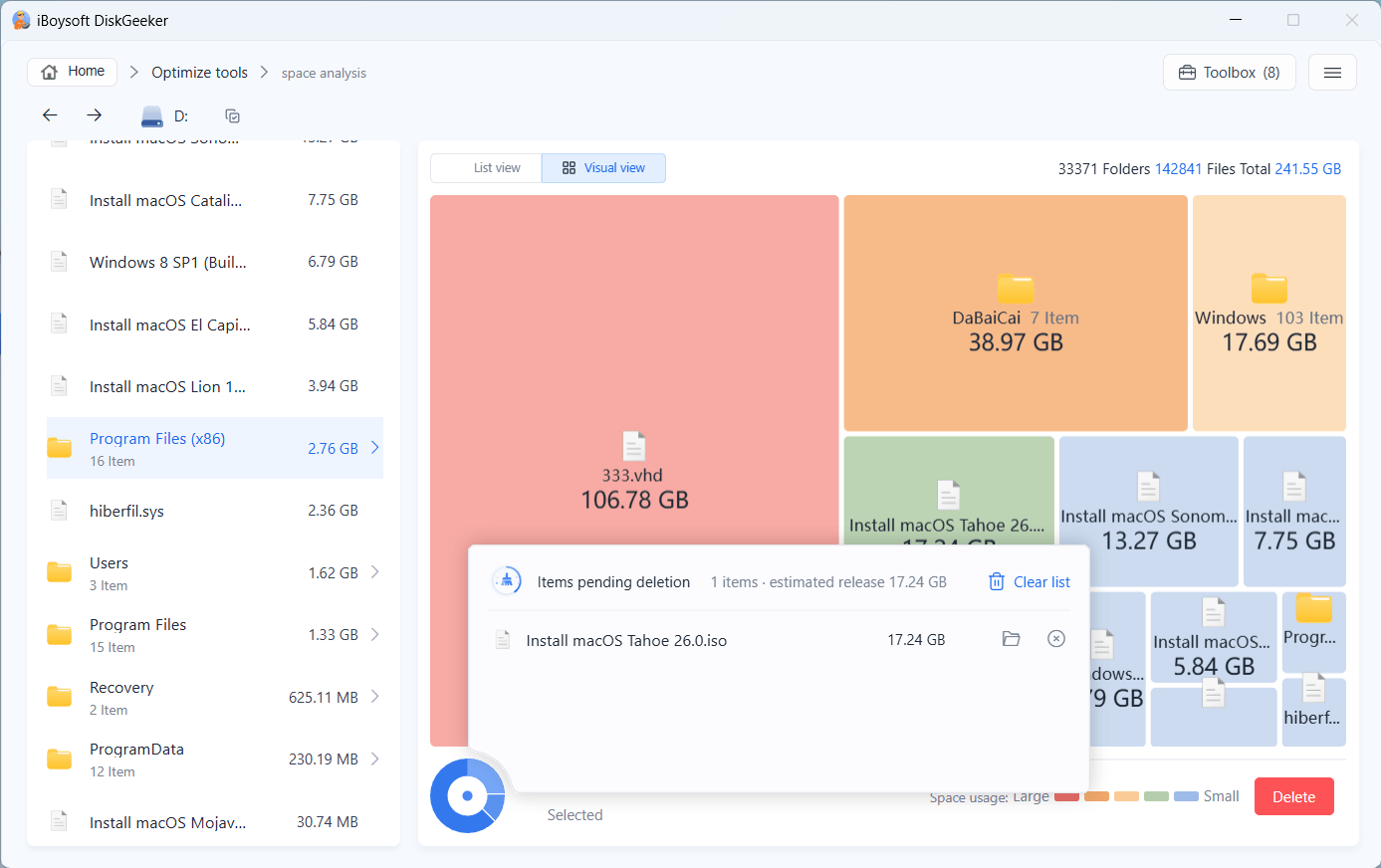
Step 5: Click the Delete button to permanently delete all files collected in this Trash Bin.
FAQ about AI Disk Space Optimization in iBoysoft DiskGeeker for Windows
1. Which disk space optimization feature should I choose in AI Disk Space Optimization?
If you want to clean up the system junk files for more space, click "Clean" next to the C: drive to start system cleanup.
If you want to check the system partition's space usage and view all files on it, you should choose "System partition analysis." It presents all files stored on the system drive (C drive) and the space usage of each file or folder.
The User folder is located in the system partition. You can choose "User folder analysis" to only scan this folder, where your user account-related files are located, such as user profile, contacts, favorites, downloads, music, documents, videos, games, etc.
If you want to scan other non-OS partitions or a specific folder, in case you know and manage the space usage of the target location, then click "Optimize" next to the target non-system partition or choose "Specific folder analysis" in "Optimize tools."
2. Can I cancel the process when the software starts scanning?
Yes, you can stop the scanning process by clicking the Cancel button on the window at any time and it won't list any scanned files there. If you want to analyze the disk space again, you need to try again.
3. Which files can I delete to free up disk space?
In system cleanup, the software automatically selects the junk files that are safe to delete. In partition or folder space analysis and management, it offers the AI analysis feature to help you learn whether a file can be deleted. Generally speaking, it is safe to delete the hibernation file, system temp files, the recycle bin data, outdated system updates, system logs, system error reports, etc. If you are still unsure whether a certain file/folder is safe to be deleted, you'd better keep it.
4. Can I cancel the deletion after the software starts deleting?
Yes, you can click the Cancel button during the deleting process.
5. Will it still delete my files or folders after I cancel the deletion?
It depends on the situation. If you are deleting a lot of large files, it takes time; then, if you cancel the deletion in time, the files may not have been deleted, or part of them may already be deleted. If you are deleting a few files, the speed could be very fast; even if you cancel it, those files may be deleted. Therefore, check the files collected in the Trash Bin before you click the Delete button.
6. Why does it say fail to delete some files?
The files you want to delete (which are usually system files) could be read-only or locked by the system, or the items are being used; the software can't delete them.
You can click the file path in the error prompt to check the file's propertieopens the Task Manager to view which process is using the files/folders.
7. Can I recover the deleted files?
Once you delete the files with iBoysoft DiskGeeker for Windows, you can't recover them.